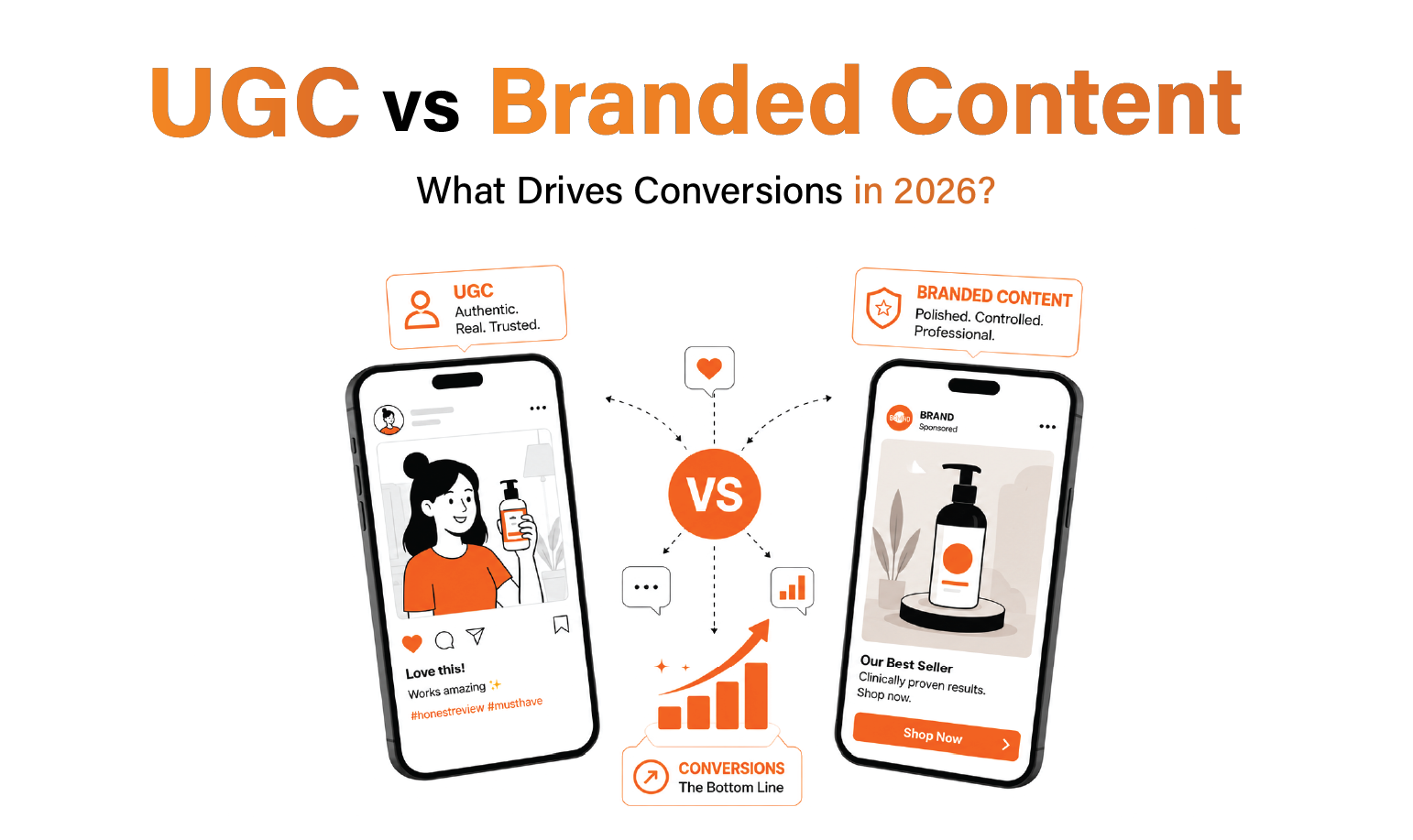
In today's digital landscape, content plays a big role in how people discover, understand, and connect with brands. Beyond attracting views, the right content builds trust, influences buying decisions, and encourages audiences to take action. As brands expand their content strategies in 2026, polished campaigns and creator-led content, both are becoming important parts of the customer journey.
Content can drive conversions in different ways, depending on the format and its role in the customer journey. UGC and branded content, for instance, influence audiences differently. UGC builds trust through real experiences and relatable perspectives, while branded content communicates value, strengthens brand recognition, and creates lasting connections with audiences. Recognising how each content type influences audiences can help brands use them more effectively to drive conversions.
What Is UGC Content?
User-generated content (UGC) refers to the content created by customers, creators, or communities rather than the brand itself. It includes product experiences, reviews, testimonials, unboxing videos, and social posts where people share their genuine opinions.
The reason UGC content has become such a powerful part of modern marketing is that people trust experiences they can relate to. A customer showing how they use a product or sharing their results often feels more authentic than a traditional brand message.
Understanding Branded Content
Branded content focuses on telling a brand's story, communicating its values, and creating a connection with its audience. Unlike direct advertising, branded content marketing is designed to build familiarity and shape how people perceive a brand over time. A strong piece of branded content explains why the brand exists, what it stands for, and why customers should pay attention.
This is especially important in crowded markets where customers are exposed to thousands of messages every day. Before someone trusts a review or clicks on a product page, they often need to recognise and understand the brand behind it.
Why UGC Performs Well in Today's Marketing Landscape?
UGC Builds Trust at the Decision Stage
UGC content works because customers see real people sharing their experiences with a product or service. Reviews, testimonials, and creator-led content help answer common questions, reduce uncertainty, and give potential buyers confidence before making a decision.
Impact of UGC on Conversions
According to Contentsquare, UGC-driven experiences achieved significantly higher conversion rates than content without UGC, resulting in strong performance across product pages and other key areas. Their research found that pages featuring UGC generated up to 154% higher revenue per visitor, while adding customer photos and reviews increased conversions by up to 74%. These figures confirm that real customer experiences provide potential buyers with useful information and greater confidence when making a purchase decision.
UGC Encourages Action
At the conversion stage, customer-led content reduces hesitation and reassures audiences to take action. It makes the decision-making process easier and encourages customers to move towards a purchase.
Importance of Branded Content
Strengthens Brand Recall
Branded content plays an important role in making a brand memorable. According to data shared by Second Street, branded content generated 86% brand recall compared to 65% for pre-roll ads. This strong recall helps audiences recognise and remember a brand as they move closer to making a purchase decision.
Communicate Brand Ideas
Branded content is used to introduce fresh ideas, simplify complex products, and communicate their value through educational or emotionally engaging stories. This approach helps audiences understand what the brand represents and gives them reasons to engage with its message. Brands also gain greater control over the stories and ideas they share. A clear brand narrative guides future campaigns and supports other formats across the wider content strategy.
Creates Recognition
Before customers trust a recommendation, they need to know the brand behind it. Branded content helps businesses introduce their story, communicate their values, and build familiarity with their audience. It creates the foundation that lets UGC perform better.
Where Brands Usually Go Wrong
Brands often create UGC and branded content as separate efforts rather than planning how they can support each other. A creator campaign may generate engagement, while branded content focuses on product education, but without a clear connection between the two, the audience receives scattered messages.
The problem usually comes down to a lack of purpose. Brands may invest in influencer partnerships, social media posts, videos, and campaigns without deciding what the achievement should be. This leads to repetitive content, inconsistent messaging, and missed opportunities to guide audiences towards a decision.
The Best Results Come from Using Both
The best results are achieved from balancing both content types. An effective content strategy gives every format a specific role. Branded content can introduce an idea, explain a product, and shape the brand message, while UGC highlights customer experiences and builds trust around those claims.
The strongest brands understand this, bringing UGC and branded content together as part of their content strategy. When both are planned around the audience's needs, they can support different stages of the customer journey, from building awareness to encouraging action.
Creating a Content Strategy that Works
At The Starter Labs, we help brands build content systems through branded content marketing, campaign strategy, creator-led content, and digital execution tailored to your brand, audience, and growth goals. Effective content is about understanding how different formats work together to build trust, drive engagement, and support conversions throughout the customer journey.
Our expert team designs a well-planned mix of content to help brands deliver the right message at different stages of the customer journey. This thoughtful planning helps every format work towards a clear goal, and content becomes consistent, purposeful, and drives conversion to support long-term growth.