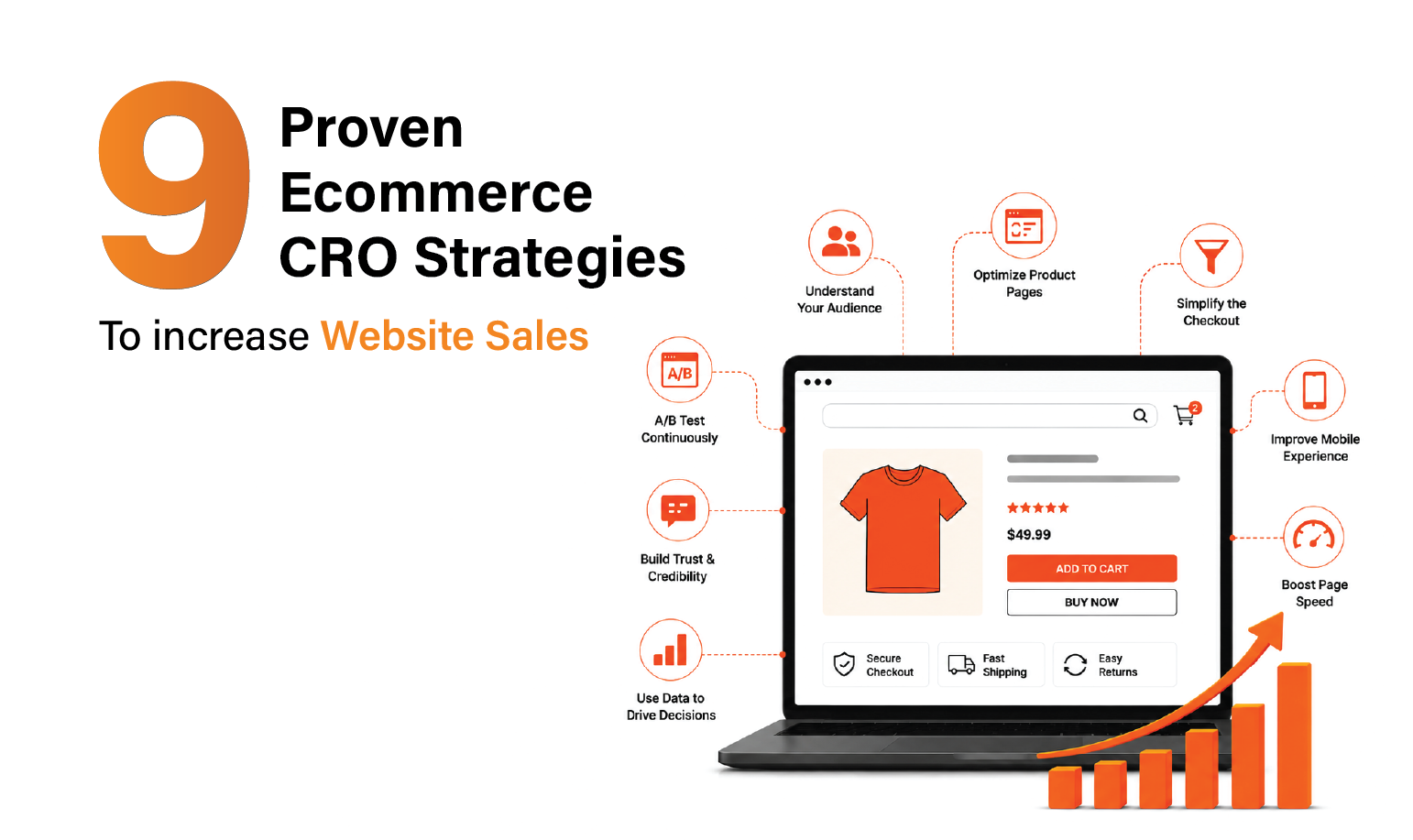
Ecommerce has created endless opportunities for businesses to reach customers beyond geographical boundaries. As brands invest in better products, strong marketing campaigns, and seamless online experiences, every website visitor brings a valuable opportunity to grow their sales and build lasting customer relationships.
However, attracting visitors is only the beginning. Successful ecommerce conversion rate optimisation (CRO) is rarely the work of a single team. It requires marketers, designers, developers, and product teams to work together to test ideas, analyse customer behaviour, and continuously refine the online shopping experience. A collaborative approach helps businesses optimise easily and achieve better results.
What is Ecommerce Conversion Rate Optimisation?
Ecommerce conversion rate optimisation (CRO) is the process of improving customer interactions with businesses' websites by identifying barriers, enhancing the user experience, and making it easy for shoppers to complete purchases. This could be making a purchase, signing up for a newsletter, or adding a product to the cart. It focuses on removing barriers that prevent visitors from converting and creating a smooth shopping experience. Despite this, potential customers still leave without completing their purchase.
According to the Baymard Institute's analysis of 50 separate studies, the average online shopping cart abandonment rate is 70.22%, meaning that out of every 10 shoppers who add something to their cart, roughly 7 leave without buying.
While some visitors are simply browsing or comparing prices, many abandoned carts stem from fixable issues. Reducing this avoidable friction can significantly improve the chances of turning interested visitors into paying customers. This is where ecommerce CRO proves its value. It identifies bottlenecks throughout the customer journey, and by making data-driven improvements, businesses can create a fast, intuitive shopping experience that encourages shoppers to complete their purchases and increases overall revenue.
Over time, the revenue improvements add up, helping businesses increase conversions, maximise the value of existing website traffic, and create a seamless shopping experience for their customers.
How to Improve Ecommerce Conversion Rate?
Watch Customer Behaviour
Assumptions about user behaviour and dashboards cannot explain why visitors are leaving without making a purchase. While metrics like bounce rate and time on page indicate what is happening, they don't reveal the real reasons behind those actions. Tools like session recordings and heatmaps provide a clearer picture by showing where visitors click, how far they scroll, and when they abandon a page.
For example, visitors may repeatedly click on images or text that appear interactive but aren't, or click on buttons that don't respond as expected. This creates confusion and disrupts their journey. Some may spend time scrolling for important details such as shipping charges, return policies, or size guides. Session recordings can reveal the exact stage where shoppers abandon the checkout process, helping businesses identify and remove unnecessary friction.
Simplify Navigation and Prioritise Mobile
A confusing menu or a slow-loading mobile page costs you sales before a shopper even reaches a product. Since the majority of ecommerce traffic now arrives on mobile devices, a mobile-first design isn't optional anymore. Clear categories, a reliable search bar, and shorter load times are some of the simplest ways to improve conversion rates.
Navigation should help visitors reach their destination with minimal effort. Keep menus organised, reduce unnecessary clicks, and ensure important pages are easy to access from any device. A seamless browsing experience encourages shoppers to stay longer and explore more products.
Strengthen Your Product Pages
Product pages play an important role in turning interested visitors into paying customers. Detailed product descriptions, customer reviews, clear pricing, return policies, and delivery information help shoppers understand the value of your offering and make informed purchase decisions. A clear and prominent "Add to Cart" button also lets visitors take the next step without hesitation.
To further improve the experience, include product videos, size guides, comparison charts, and answers to frequently asked questions wherever relevant. Taken together, all this addresses common concerns, removes doubts, and helps customers choose the right product. A well-optimised product page improves conversions and reduces returns by setting accurate expectations before purchase.
Remove Friction From Checkout
Checkout abandonment is one of the biggest and most preventable barriers to ecommerce conversions. In many cases, shoppers are ready to buy but leave because the checkout process feels complicated. Long checkout forms, unexpected costs, and mandatory account creation create friction that discourages customers from completing their purchase.
Offering guest checkout, displaying all costs upfront, and supporting multiple payment methods are simple yet effective ways to improve conversions. A smooth checkout experience includes features such as autofill, progress indicators, and clear error messages, making the process fast and easy to navigate.
Build Trust with Social Proof
Shoppers are far more likely to buy from a brand they trust, especially if it's their first purchase. Reviews, testimonials, security badges, and clear shipping and return information provide reassurance at every stage of the buying journey. These trust signals help reduce hesitation and give shoppers confidence in your products and business.
One of the most effective ways to build that confidence is by showcasing real customer experiences. This includes displaying genuine customer feedback across your website to answer common questions and reduce uncertainty. Verified purchase reviews, product ratings, and user-generated photos add authenticity.
Use Timely Messaging
Generic promotional messages often fail to address what shoppers need at different stages of their buying journey. Instead of treating every visitor the same, brands can use customer behaviour data to deliver relevant communication. Exit-intent popups, personalised email flows triggered by browsing activity, and gentle urgency cues such as limited-time offers can help re-engage shoppers who show interest but need an extra push before making a decision.
Personalisation works best when it adds value to the shopping experience. Product recommendations based on past interactions, reminders for abandoned carts, back-in-stock alerts, and tailored offers help shoppers discover products that match their interests.
Make Stronger CTAs
A call-to-action (CTA) button plays a key role in guiding visitors to the next step, such as adding a product to the cart, signing up, or completing a purchase. However, even the most persuasive CTA will not drive results if shoppers cannot find it easily. Heatmap tools help brands understand how visitors interact with a webpage by showing where they click, scroll, and focus their attention. These insights can reveal whether important CTAs are being noticed or ignored.
To make CTAs effective, keep their design and placement consistent across your website so visitors always know what action to take next. Clear, action-focused text, enough surrounding space, and colours that stand out from the rest of the page help catch attention easily.
Test One Change at a Time
Making several changes to a webpage at once may seem like a quick way to improve results, but it makes it difficult to understand what actually worked. A/B testing one element at a time helps brands accurately measure the impact of each change. Small, consistent improvements often deliver better results than large changes made without understanding the factors that influenced customer behaviour.
Start by testing important areas such as product pages, landing pages, and checkout screens. Track the results before making the next update so you can identify which changes are helping improve conversions. Over time, these small optimisations create a smooth shopping experience.
Set Clear Goals and Repeat the Process
CRO is an ongoing cycle of observing, hypothesising, testing, and refining. Teams that set clear KPIs for both major conversions and "micro-conversions," like newsletter sign-ups, consistently outperform those chasing one-off wins.
Additionally, businesses should regularly review performance metrics to identify new opportunities as customer behaviour evolves. Tracking conversion rates alongside metrics like cart abandonment, average order value, and customer engagement provides a complete picture of your website's performance. Continuous optimisation ensures your ecommerce store keeps improving as market trends and customer expectations change.
Building Ways to Improve Website Sales
Knowing which website conversion optimisation strategies to implement is one thing; applying them consistently and understanding what truly works is another. That is where many brands struggle, as improving conversion rate requires continuous testing, analysis, and a clear understanding of customer behaviour.
At The Starter Labs, we help brands turn ecommerce insights into structured conversion optimisation strategies that improve the way customers interact with their websites. We identify opportunities, refine user experiences, and create data-backed solutions, helping businesses build online experiences that drive meaningful results.