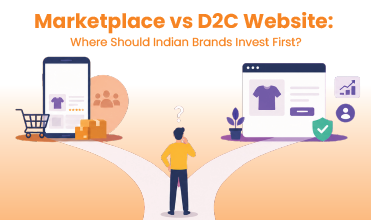
With millions of Indians now shopping online, there's never been a better time for Indian brands to start selling online. What are the two most popular strategies? Creating a D2C website or joining a marketplace. Both have their advantages and downsides.
The truth is, D2C vs marketplace isn't a black-and-white choice. There are many factors to consider. Knowing where your brand is right now will help you decide what's best for you.
Marketplace vs D2C Website: Understanding the Fundamentals
A marketplace is a third-party e-commerce platform that offers services, such as Amazon, Flipkart, Meesho, or Nykaa, through which you can sell your products. While it will provide you with a customer base, you end up sharing your profits according to its policies.
D2C website (direct-to-consumer) refers to setting up your own store, using a platform such as Shopify or WooCommerce, through which you market and sell your product directly to your target consumers. This is an independent strategy and business model for marketing.
Both have merits and are equally important; however, they play different roles in your brand's development.
Key Differences: Marketplace vs D2C Website
Customer Ownership and Data
In a marketplace setup, the customer isn't yours. Even if you made the sale, the email address, purchase data, and any other retargeting information remain with the marketplace.
For a D2C website, every customer you earn becomes your property. From first-party data collection to building a remarketing segment to sending out emails and starting a loyalty program, the advantages you enjoy from having your customers' data make a huge difference for a D2C brand.
Setup, Cost, and Time to Market
Marketplace wins here. You can have your products listed on marketplaces such as Amazon and Flipkart within days. The platform's millions of users will ensure a fast start and revenue generation from day one. There's no web development cost, SEO process to go through, or the need for spend on paid traffic.
While it may take a while to develop and launch your D2C website, it will be a long time before you see sales. However, when sales come in, your margins will be much higher than in e-commerce because you won't be paying any commission to the marketplace.
Brand Identity and Customer Experience
One of the major advantages of doing D2C is building the brand identity from scratch and throughout the experience journey. Your website, packaging, post-purchase communication, and product pages all speak the language of your brand. You will just be one more item among a thousand items on marketplaces with no control over how your product is presented.
In categories such as beauty, wellness, fashion, and food products, differentiating a brand is crucial for Indian D2C brands. The direct-to-consumer business model allows you to control the entire narrative.
Discoverability and Traffic
Marketplaces provide organic traffic from the start. A study from BloomReach found that about 55% of customers start their shopping journey on Amazon, while only 26% start by searching for products using Google.
Having a website means investing in acquiring traffic. Whether via performance marketing, SEO, influencer marketing, or social media channels, driving people to your website requires time and resources.
Where Should Indian Startups Invest First?
Here's the practical answer: start where your customers already are, but build toward where you want to be.
For most early-stage Indian D2C brands, the marketplaces offer a relatively safe path to entry. You can test your products, get some reviews, make money, and know how your customer buys without having to build any technology or marketing stack from scratch.
Once you've proven your product, you must build your own D2C website. Here is where you create your scalable brand, with better margins, customer relationships under your control, and brand equity that cannot be replicated with a listing update or algorithm shift.
The benefits of an online marketplace and those of a D2C Strategy brand are not mutually exclusive. Some of India's biggest brands leverage both. Marketplaces for scale and discoverability, and D2C websites for customer loyalty, storytelling, and profits.
The Starter Labs Approach
At The Starter Labs, we believe the best strategy is tailored. Rather than a single right way, we help entrepreneurs find the fit that matches their specific growth stage and category.
Be it testing your product in India's largest e-commerce marketplace or developing an end-to-end direct-to-consumer experience through performance marketing and user retention strategies, we partner with you to devise a scalable plan.